

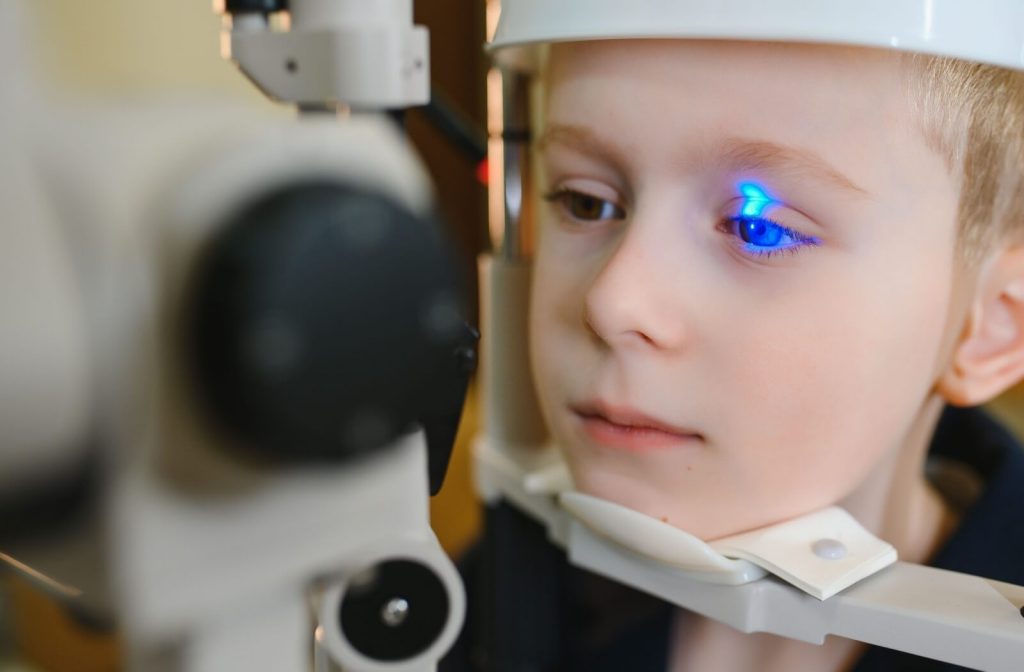
You watch your child grow and develop every day. From their first steps to their first words, each milestone is important. Their vision is a key part of this journey, quietly helping them learn about the world.
Regular eye exams are a simple step you can take to support your child’s vision and overall well-being, which is why our team at West 10th Eyes focuses on pediatric care.
Your child should have their first comprehensive eye exam between 6 and 9 months old. Following this timeline helps catch potential issues early and sets your child up for success, both in school and in life.
The Recommended Timeline for Your Child’s Eye Exams
A suggested schedule for children’s eye exams can help you support their visual development. Following this timeline helps keep your child’s eyes healthy as they grow.
The First Exam: 6 to 9 Months
The first visit is a foundational check-up. At this stage, an eye doctor can see if your baby’s eyes are working together and developing properly by checking for key visual milestones. This exam happens before your child can talk, but it provides valuable insight into their vision.
The Toddler Check-up: Around Age 3
By age 3, your child’s vision skills have developed quite a bit. This makes it a good time to check for eye muscle concerns—like crossed eyes or amblyopia (lazy eye). Early detection can make a difference in how effective any needed support is.
The School-Ready Exam: Before They Start School
Before your child enters the classroom, a comprehensive eye exam is a great idea. This check-up helps confirm their eyes are ready for the close-up work that comes with learning to read and write.
What to Expect at a Pediatric Eye Exam
A children’s eye exam is designed to be engaging and stress-free.
How an Eye Doctor Tests a Young Child’s Vision
Instead of an eye chart, your child’s eye doctor may use lights, pictures, and fun games to get your child’s attention. This helps them assess how your child’s eyes focus, move, and work as a team—all part of a comprehensive eye health check.
Key Things the Doctor Checks For
- How clearly your child can see at different distances
- Proper eye alignment and muscle movement
- The overall health of the front and back of the eye
Common Vision Milestones in Early Childhood
Your child’s vision develops rapidly during their first few years. Vision is typically fully developed around early school age.
Birth to 6 Months: Focus & Colour
When your child is born, they see blurred shapes. Over the first few months, you may notice their ability to focus improving, their colour vision emerging, and their eyes beginning to work together.
6 to 12 Months: Depth Perception & Coordination
As your baby becomes more mobile, their eye-hand-foot coordination develops. You may notice them starting to judge distances more accurately, which is an important skill for crawling and exploring.
1 to 3 Years: Refine Skills
During the toddler years, your child’s depth perception and eye-hand coordination continue to improve. This is when they establish the visual skills needed for lifelong learning.
Signs Your Child May Have a Vision Problem
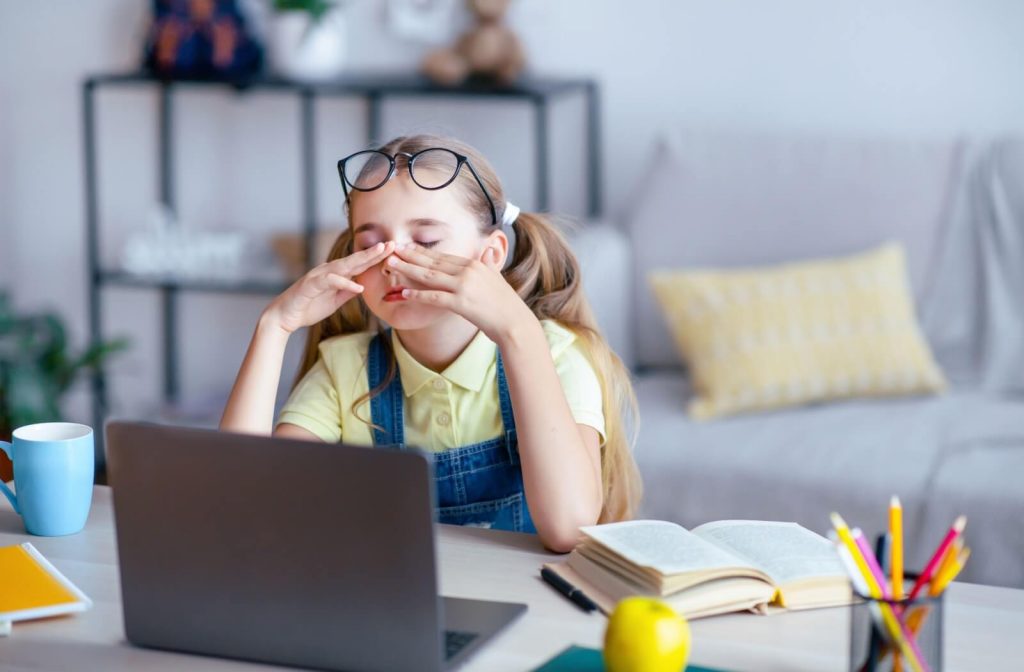
Sometimes, children show subtle signs that their vision needs support. If you notice any of the following behaviours, it may be a good time to schedule a visit with your eye doctor in West Point Grey Village.
- Regularly squinting, blinking, or rubbing their eyes
- An eye that appears to turn in or out
- Sensitivity to light
- Covering one eye to see better
- Holding books or toys very close to their face
- Tilting their head to one side
- Avoiding activities like looking at books or drawing
How You Can Support Healthy Vision at Home
In addition to regular check-ups, you can create a supportive environment for your child’s eyes. Simple, everyday habits can make a positive difference in their long-term eye health.
Encourage Outdoor Play
When your child plays outdoors, this gives their eyes a chance to focus on things in the distance. This change of focus can be beneficial for their visual development and may reduce their risk of developing nearsightedness.
Manage Screen Time
You can help reduce your child’s eye strain by encouraging breaks from screens. Maintaining a comfortable distance—about an arm’s length from smaller screens and several feet from larger ones—also helps.
Protect Their Eyes from the Sun
When you’re outdoors, you can shield your child’s sensitive eyes by having them wear a wide-brimmed hat and sunglasses that offer UVA and UVB protection.
Protect Your Child’S Vision
Regular eye exams are a key part of your child’s overall health care. Our team at West 10th Eyes focuses on providing a comfortable and informative experience for your family. Schedule an appointment today to support your child’s vision for years to come.