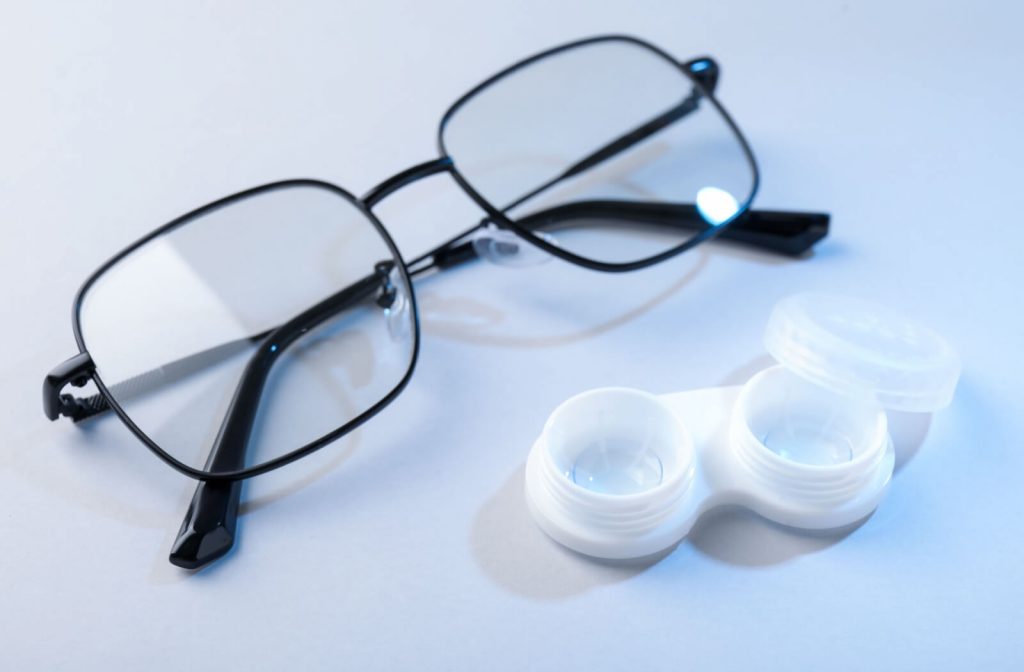
You might have a prescription for your glasses and wonder if you can use it to order contact lenses. It seems logical, since they both help you see clearly, but our team at West 10th Eyes wants you to understand why they’re different.
No, your contact lens and glasses prescriptions are not the same because they sit at different distances from your eyes, which affects the information included with the prescription. Our team can teach you about your contact lenses, proper care, and even recommend a type of lens for your unique eyes.
Why Your Prescriptions Are Different
The Distance to Your Eye Matters
Your glasses sit a small distance away from your eyes, usually 12–14 millimetres. Contact lenses, on the other hand, rest directly on the surface of your eye. This small gap changes the lens power required to focus light correctly for your vision.
Because of this difference in distance, the strength of the prescription often needs to be adjusted. A glasses prescription doesn’t account for this, which is part of the reason why they can’t be used interchangeably.
Fit and Comfort
Your eyes have a unique shape and curve. A contact lens must match these details precisely to fit comfortably and provide clear, stable vision. An improper fit can lead to discomfort or blurry sight, which is why we perform contact lens fittings.
How to Read Your Glasses Prescription
Your glasses prescription contains specific information to correct your vision from a distance. These details guide the creation of your specific eyeglass lenses. The main components you’ll see are:
- Sphere (SPH): This number indicates the lens power needed to correct nearsightedness or farsightedness.
- Cylinder (CYL) and axis: These values address astigmatism (an imperfection in the curvature of your eye).
- Add: You’ll see this on prescriptions for bifocal or multifocal lenses, providing extra power for reading.

What Makes a Contact Lens Prescription Unique
Extra Measurements for a Perfect Fit
A contact lens prescription includes a lot of what a glasses prescription does, plus additional details for fit and material. These measurements ensure the lens sits safely and correctly on your eye.
- Base curve (BC): This measures the curvature of the contact lens so it matches the curve of your eye.
- Diameter (DIA): This is the size of the lens from edge to edge, which determines how it covers your cornea (the clear, outer layer of your eye).
- Brand and material: The prescription specifies the exact lens type, as different materials affect oxygen flow, comfort, and overall contact lens safety.
Special Lenses for Astigmatism
If you have astigmatism, you may need toric contact lenses. These are designed to stay in a specific position on your eye to correct the uneven curve. Your prescription will include specific cylinder and axis values for the lens.
The Need for a Professional Contact Lens Fit
What to Expect at Your Appointment
A contact lens fitting is a separate part of your eye exam. During this appointment, our team can carefully measure the surface of your eye to find the right lens shape and size for you. You’ll also get to try on sample lenses to see how they feel before you finalize your prescription.
Work with an Eye Doctor
Getting a professional fit is an important step for your long-term eye health. An eye doctor in West Point Grey Village can confirm that the prescription provides clear, comfortable vision. You’ll also learn the correct way to insert, remove, and care for your new lenses.
Common Questions About Contact Lenses
Your Lens Replacement Schedule
Your contact lenses have a replacement schedule, usually daily or monthly. It’s important to follow the timeline recommended by your optometrist and the lens manufacturer, as wearing contacts longer than instructed can affect your eye health. You can order replacement contacts as needed to stay on track.
Sleeping with Contact Lenses
You may wonder if it’s okay to sleep in your contacts. Most lenses are not designed for overnight wear and should be removed before bed. Some specialty lenses may allow it, but you should always follow the specific instructions from your eye care team for proper wear and care.
Schedule Your Eye Exam Today
While both glasses and contact lenses help you see the world clearly, their prescriptions are designed for 2 very different experiences. The fit, material, and distance from your eye all play a part in creating a prescription tailored just for you. Our team at West 10th Eyes is here to help you find the right option for your needs. Schedule a consultation today.