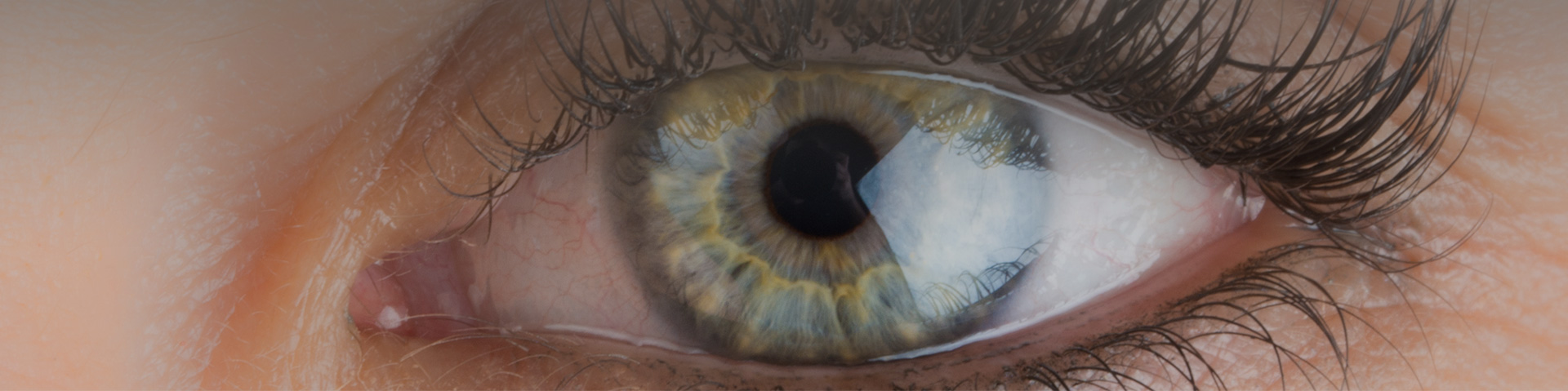
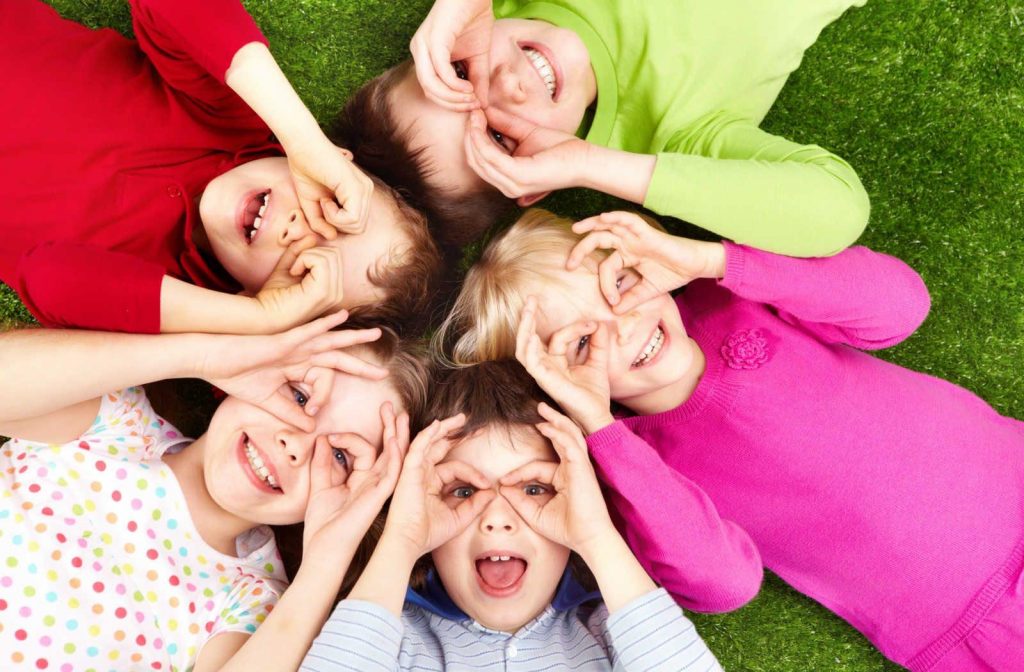
Most kids have no idea their vision has changed, since a fuzzy whiteboard or a hard-to-read page is the only way they’ve ever seen the world. Our optometrists often find vision problems during a children’s eye exam before a child mentions anything. Plenty of clues show up at home, too, in small daily habits like how close your child sits to the TV or holds a book.
If your child squints, tilts their head, rubs their eyes, gets headaches, or struggles with schoolwork, book an eye exam to find out whether glasses could help.
Physical Signs Your Child May Need Glasses
Kids adapt quickly. When words on a page look fuzzy, they’ll lean in closer or narrow their eyes without saying a thing about it.
It’s easy to assume you’d notice, and 61% of Canadian parents mistakenly believe they’d know if their child had a vision problem. Pay attention to what your child’s body does when they concentrate, and watch for signs like these:
- Squinting at the TV, a book, or the board at school
- Tilting or turning their head to look at something
- Rubbing their eyes often, especially after reading
- Headaches around the forehead
- Watery eyes by the end of the day
Eye Alignment Problems in Children
Look at how your child’s eyes move together. If an eye drifts outward or turns inward while the other stays put, mention it to your optometrist, even if it only comes and goes. A drifting eye can show up when your child is tired.
This kind of misalignment is called strabismus, or crossed eyes, and it affects about 5% of children. Kids don’t outgrow it on their own. Over time, the brain may start ignoring the turned eye, which can lead to lazy eye.
Some children cover an eye to read or watch a screen, which may be their way of blocking out double vision. Glasses are one of several treatments your optometrist may suggest.
Behaviour Clues at Home and School
Vision problems can change how your child acts at home and in class. You might see them sitting inches from the TV or reaching for a soccer ball a moment too late. Adults often mistake those habits for restlessness or clumsiness.
Homework that used to take 15 minutes may stretch into an hour of wandering attention. Copying from the board gets frustrating when your child skips letters or mixes up numbers, and they may lose their place mid-sentence when reading.
If your child avoids reading altogether, check whether the page is hard to see. Kids with myopia (nearsightedness) see books up close clearly while the front of the classroom looks blurry, so they may do fine at their desk and struggle with anything written on the board.
Signs in Toddlers and Non-Verbal Children
Toddlers can’t tell you things look blurry. Watch for patterns over a few weeks, and bring them up at the next exam if you notice:
- Squinting or turning away from bright sunlight more than other kids
- Holding their head at an unusual angle to look at toys or faces
- Trouble following a rolling ball or a bird outside
- Tripping more often than other kids their age
What Age Do Kids Usually Get Glasses?
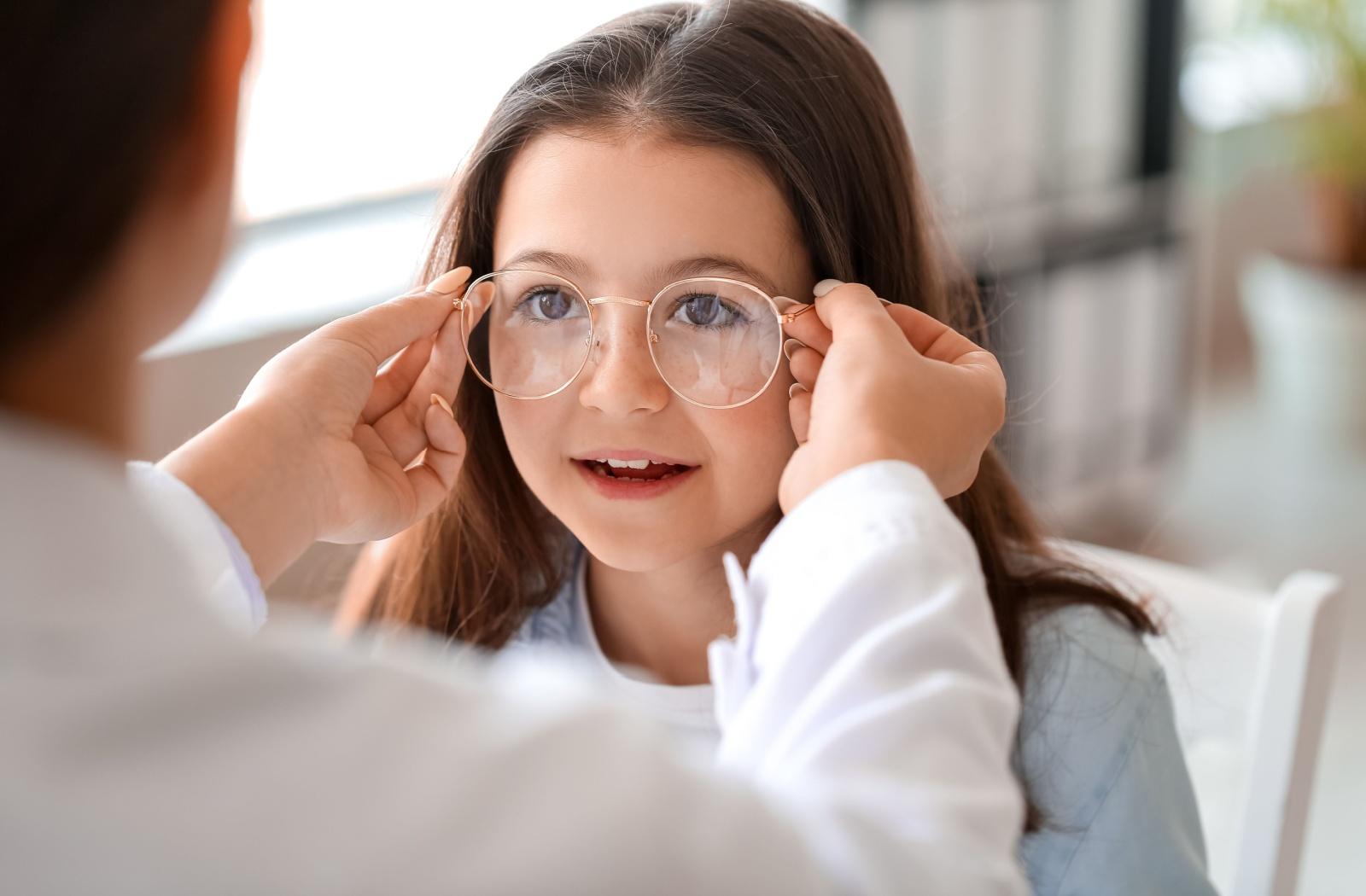
Some parents are surprised when a 2- or 3-year-old needs glasses, but young kids can need them too. Many children get their first pair around age 6 or 7, which is when myopia often starts to appear.
Children’s eyes grow along with the rest of them, so last year’s prescription may not match what your child needs today.
Screen time plays a part, too. Long stretches on a tablet can leave eyes tired and sore by dinnertime, and that fatigue can make an existing vision problem easier to spot.
Teach your child the 20-20-20 rule: every 20 minutes, look at something 20 feet away for 20 seconds. And send them outside when you can, since an hour outdoors each day may help delay myopia.
How Often Kids Need Eye Exams
Regular exams can help you stay ahead of changes as your child grows. Plan for these visits:
- A first exam between 6 and 9 months old
- Another exam between ages 2 and 5
- Yearly exams from ages 6 to 19
Book sooner if you notice new signs or if existing ones get worse.
What Happens During a Kids Eye Exam
Along with reading letters off a chart, a full exam looks at your child’s eye health, focusing, coordination, and depth perception.
Toddlers don’t need to know their letters. We use lights and toys to see how each eye responds, and we keep the pace relaxed so the visit feels more like play.
If glasses can help, our optical team can fit your child with frames that sit comfortably on a small nose and stay in place at recess. Give your child time to adjust to their new glasses, since getting used to seeing clearly can take up to 2 weeks.
Find Out If Your Child Needs Glasses
You know your child’s habits better than anyone, so trust what you’re noticing. A squint at the TV or a string of afternoon headaches is worth a closer look.
At West 10th Eyes, we examine children from infancy through their teen years and can tell you whether glasses could help your child see comfortably at school and at play. Book a children’s eye exam, and bring along a list of what you’ve noticed at home.